Model · 12V 2A
Effcium A12 — dual-output 12V mini UPS
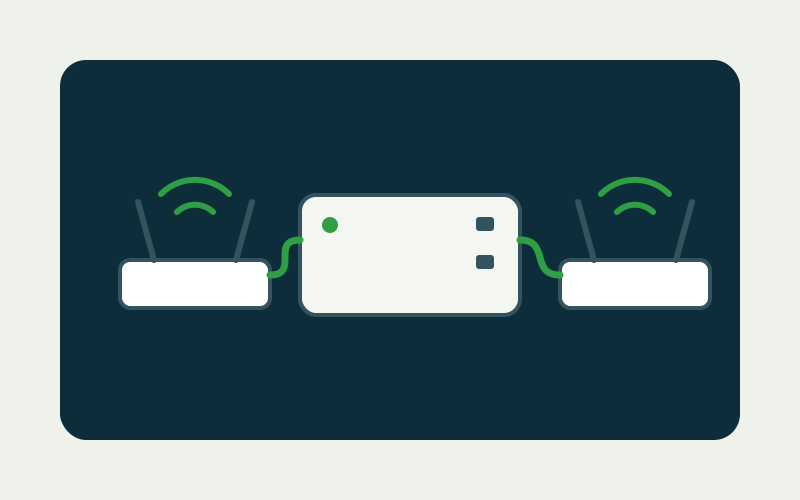
When both boxes on the shelf run on 12V — a router and its modem, a switch and its controller — the Effcium A12 backs them up from one unit with two independent DC 12V 2A outputs, in a 7,800 mAh configuration sized for the pair.
Specifications — Effcium A12
| Model | Effcium A12 |
|---|---|
| Outputs | Dual DC 12V 2A |
| Known version | 7,800 mAh |
| Typical loads | Router + modem pairs on 12V |
Two ports, one less box
The alternative to a dual-output unit is two single backups, two chargers and two things to fail. The A12 consolidates the matched 12V pair onto one battery and one supply, which is how most small network corners actually want to be built. Confirm both devices' current draws in the inquiry — the pair's combined draw is what the runtime follows from.
Ordering notes — Effcium A12
Order against the pair, not the single device: the two loads' adapter ratings together decide whether this dual-output case is the right size or whether the three-port Optima 301's wider output budget is the safer shelf choice. Either answer is a catalogue answer — the inquiry just needs both nameplates' figures to make it.
Two devices, one battery: the A12's working pattern
The A12's dual-output design — two DC 12V outputs on one pack — matches the most common small-installation shape in this catalogue's world: a router and a modem, a recorder and its camera supply, a terminal and its peripheral, paired at one location on one mains feed. A single-output unit forces a choice between the pair; two single-output units double the batteries to maintain. The dual-output design is the economy of backing up the pair as the pair actually lives — one unit to place, one charge state to check, one replacement horizon to track.
The discipline the design asks in return is honesty about the pair's combined draw. Two outputs share one battery, so the inquiry should list both devices with their adapter ratings; the pair's combined draw is checked against the unit's rating before the order is confirmed, with the family's higher-capacity or dual-rail alternatives named where the pair does not fit, rather than the mismatch being discovered during the first long outage.
Choosing the A12's build
The A12 is also built at 7,800 mAh, so the inquiry should treat capacity as a decision, not a default. The deciding evidence is the site's outage profile and the pair's draw: name both, and the build is argued from them. Buyers rolling the model out across many sites should record which build sits where on the asset register.
Installation counsel is brief: place the unit where both devices' cables reach without strain, keep its indicators in the sightline of whoever passes, and record the pair it serves on the asset register at commissioning. The register entry is what turns a future runtime question — 'why did site four fade early?' — into a lookup instead of an investigation.
Pair sites and single sites in one fleet
Fleets rarely consist of pairs alone: the same network usually has a few single-device sites — one recorder in a cupboard, one terminal on a wall — where the dual-output unit's second port would sit empty. The catalogue's answer is to run the A12 at pair sites and its single-output sibling at the singles, with one register and one commissioning habit across both. State the fleet's pair-to-single ratio in the inquiry and the quotation can be structured as the fleet it actually is.
Related pages
Ask for a quotation
Tell us the model, the output voltages your equipment needs and the quantity band for your order. If you are matching a UPS to a router, camera or terminal, add the device's rated voltage and current.