What a mini UPS does differently
A mini UPS is not a small version of an office UPS. It outputs DC power directly — 5V, 9V, 12V, 19V, 24V or 48V PoE — so there is no inverter stage in the path. The adapter feeds the unit, the unit feeds the device, and the battery charges from that same path.
That makes the buying question a matching question. The device label states a voltage and a current; the UPS has to offer that voltage on one of its ports, with at least that much current, and enough capacity for the backup time the job needs.
Start with the family that fits the load
Most orders fall into a few patterns. A home or small-office network needs a multi-output unit with 9V and 12V ports. A camera on a long cable run needs PoE power delivered over the cable. A DVR, POS terminal or mini PC with a bigger draw needs a high-capacity or online model. The nine families below organise the range the same way, and each family page lists its models with their headline ratings.
Everyday backup for routers and modems
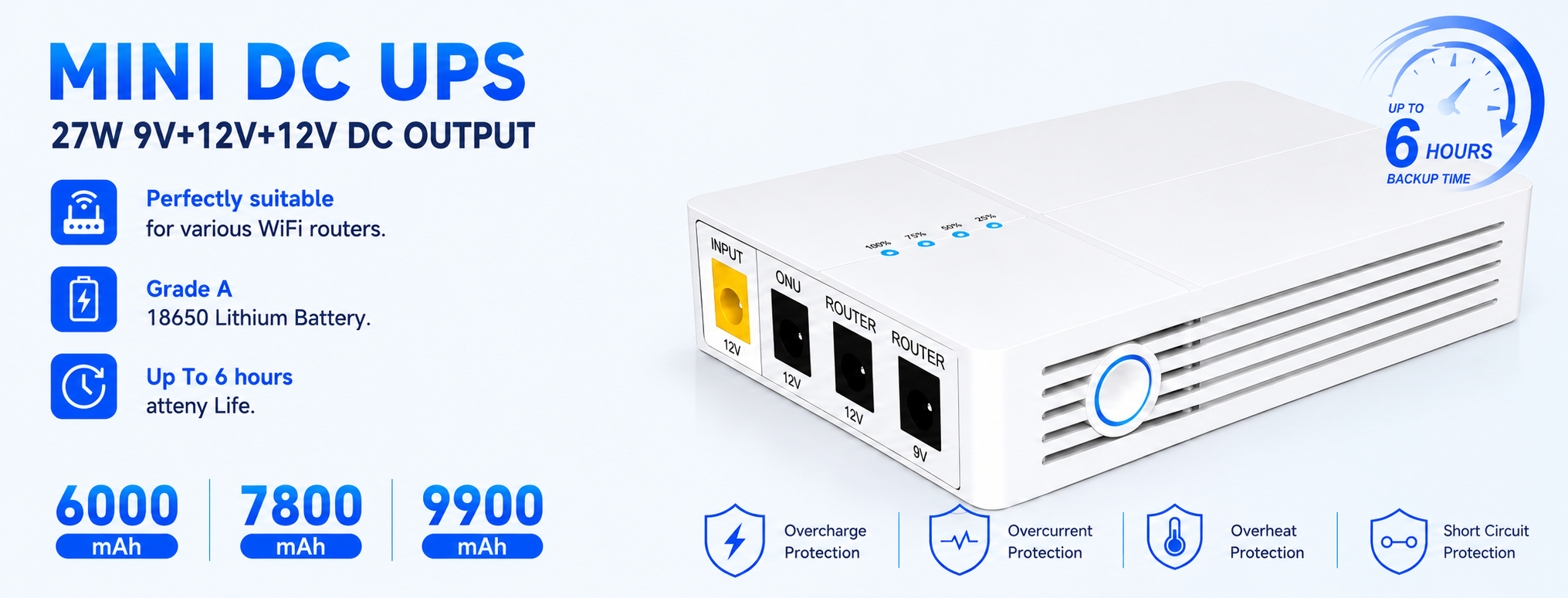
Multi-output mini UPS
One unit feeds a router, an ONU modem and a camera from one battery, with 9V and 12V DC ports plus USB on selected models.
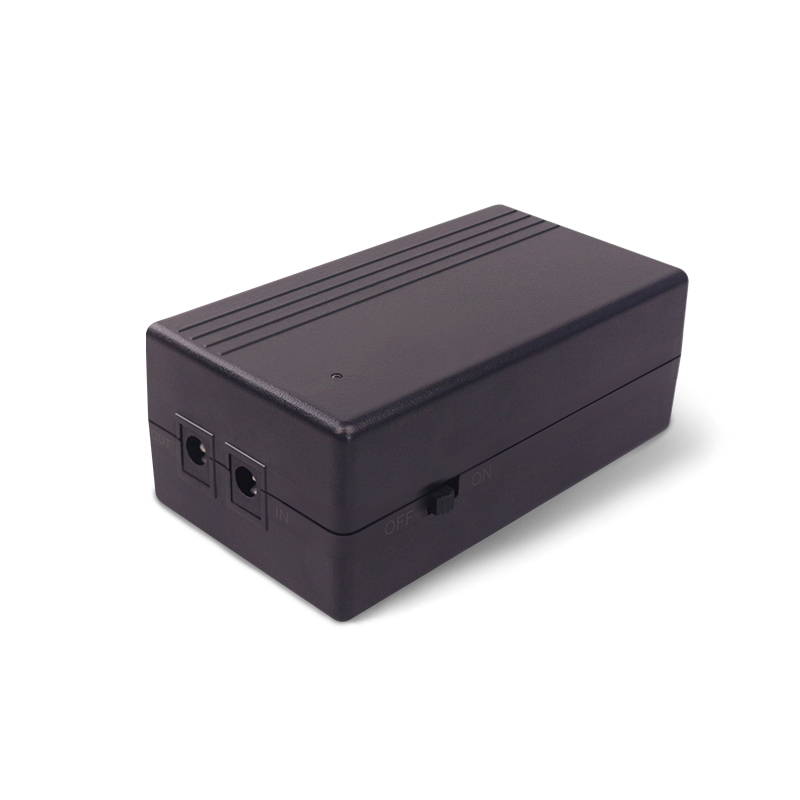
12V 2A mini UPS
The workhorse class: single and dual-output 12V 2A units for routers, modems and CPE in volume deployments.
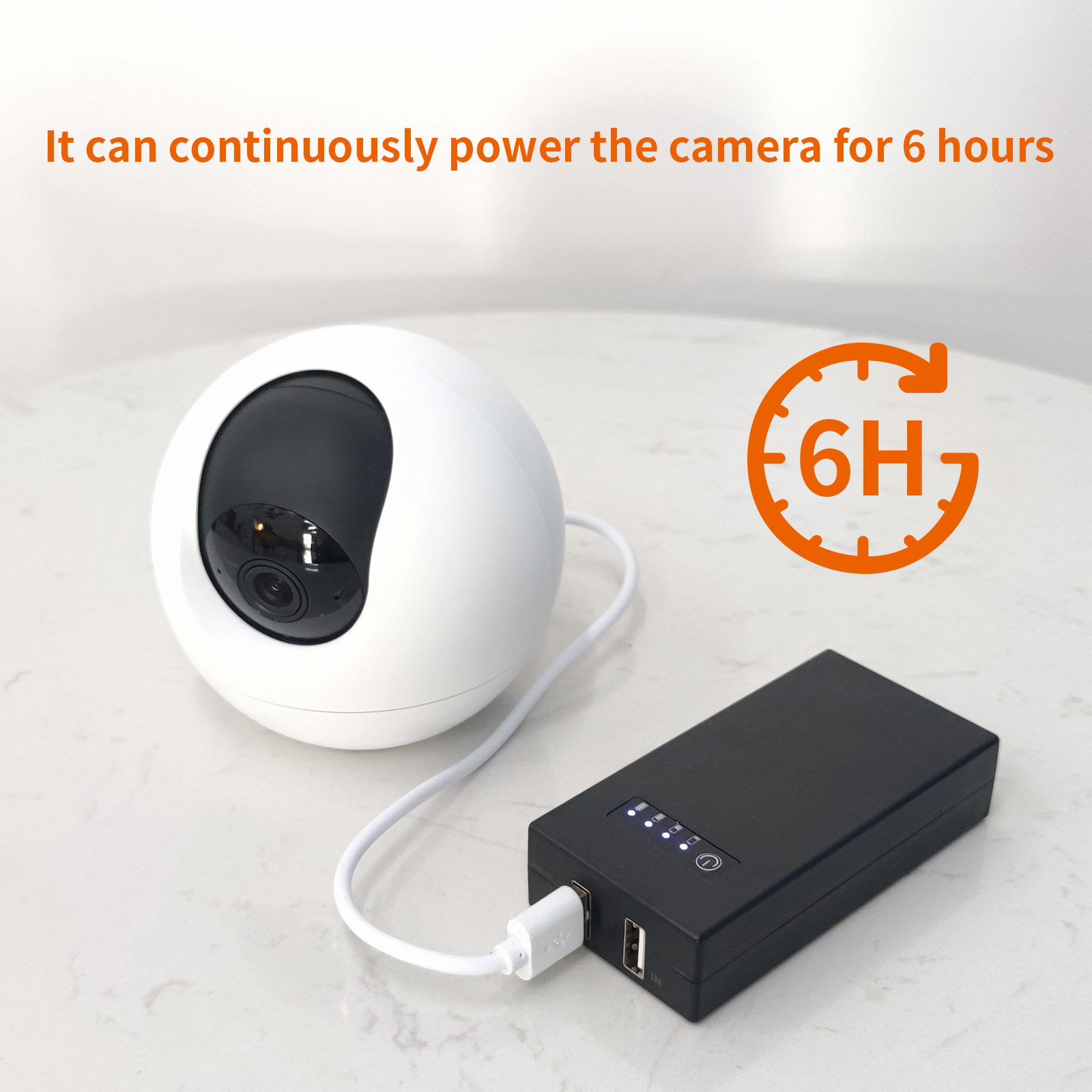
5V USB mini UPS
A pocket-size 5V 2A backup for a single CCTV camera on USB power.
PoE, cameras and long-life cells
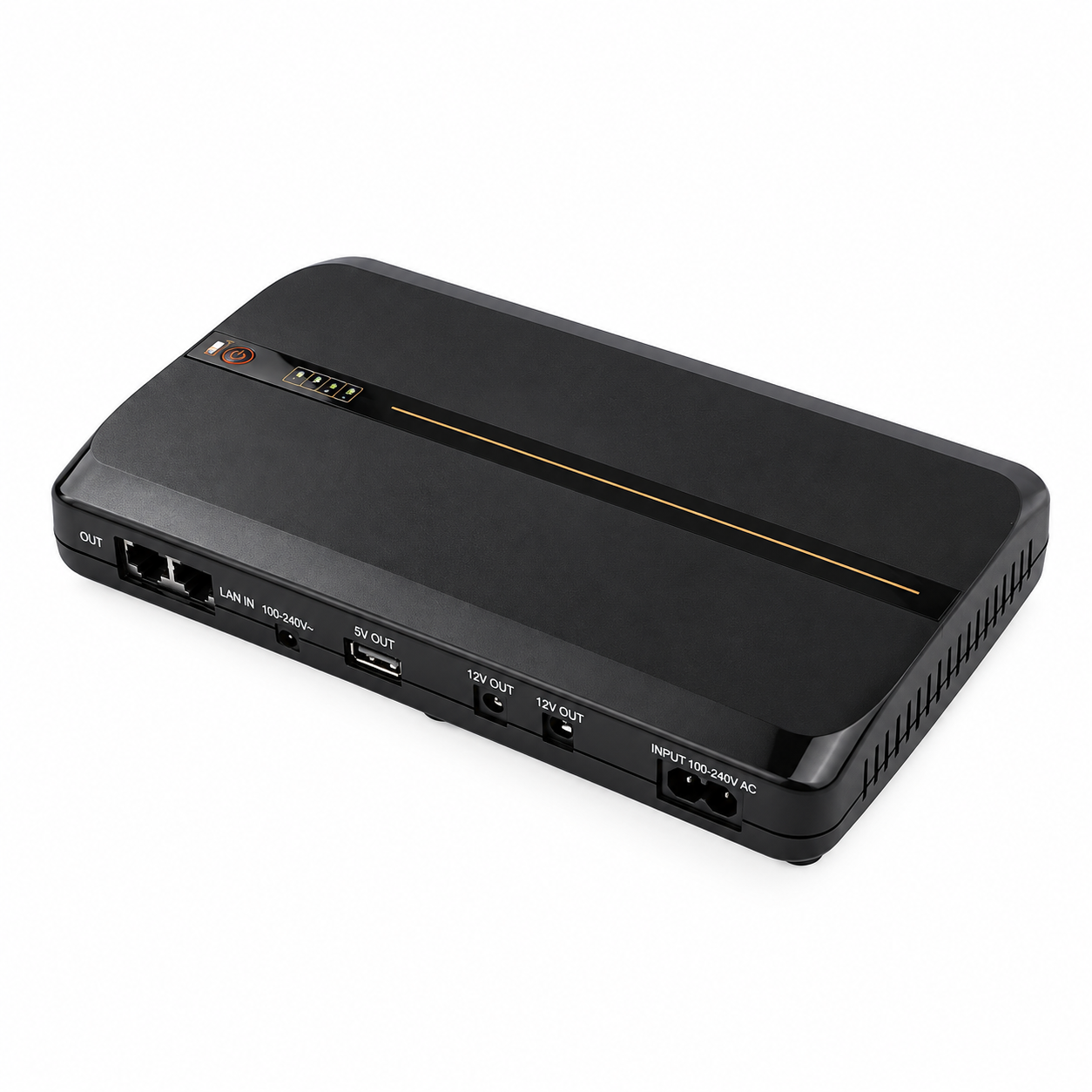
PoE mini UPS
24V or 48V Power over Ethernet plus DC and USB outputs — one unit feeds the camera and the network behind it.
LiFePO4 mini UPS
Lithium iron phosphate cells for buyers who prioritise cycle life and thermal stability in a compact backup unit.
Heavy and always-on loads
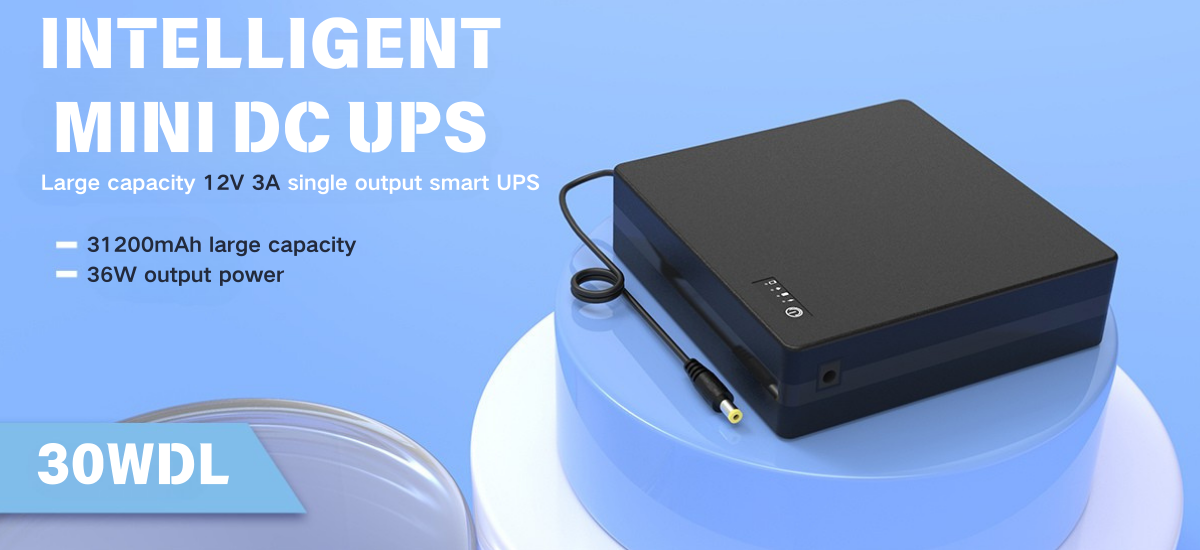
High-capacity mini UPS
Up to 31,200 mAh in a single-output 12V design for longer runtimes on routers, DVRs and terminals.
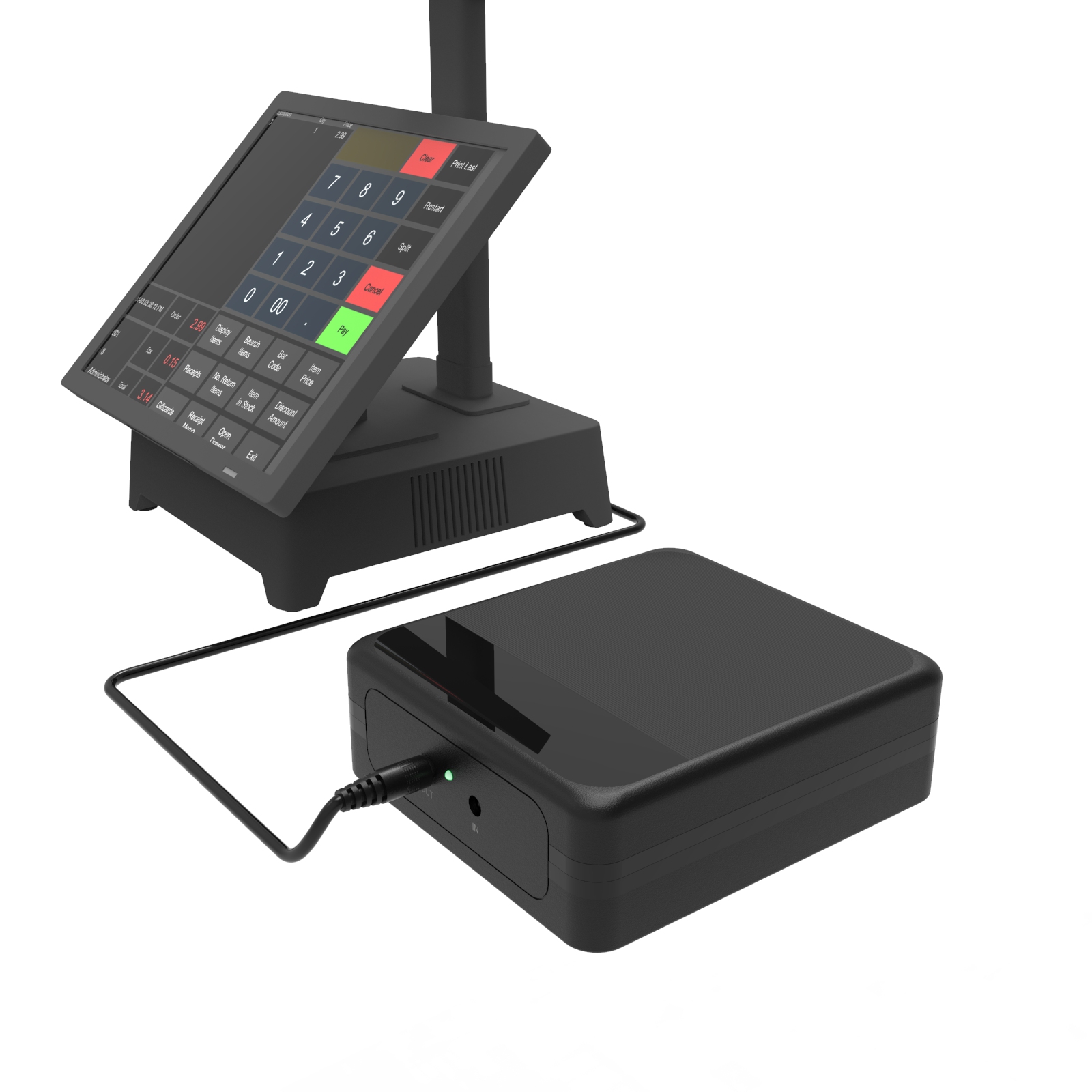
Online mini UPS
High-power online models up to 72W for POS printers, mini PCs and DVRs with no transfer at a mains failure.
Power banks and step-up cables
Multi-function power bank
A 31,200 mAh, six-output power bank that doubles as emergency backup for LED strips, cameras and phones.
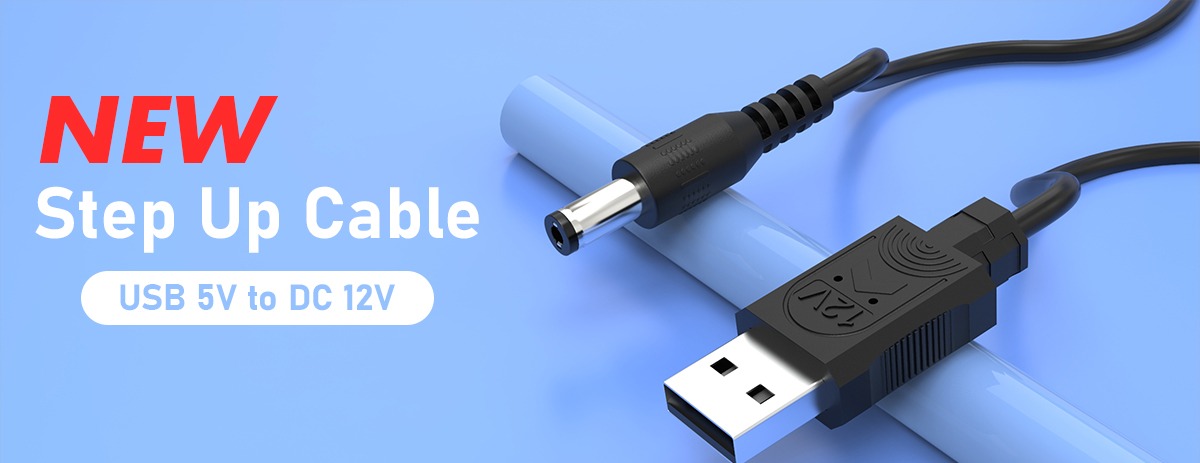
USB step-up cables
Booster cables that step USB 5V up to 9V or 12V, so a power bank can run a router in an emergency.
Specifications
| Spotlight — Optima 301 output ports | DC 12V 2A · DC 12V 2A · DC 9V 1A |
|---|---|
| Spotlight — Optima 301 capacity tiers | 6,000 · 7,800 · 9,900 mAh (18650) |
| Spotlight — Ethrx P1 PoE output | 24V 1A / 48V 0.52A, switchable · gigabit |
| Spotlight — Maxora capacity | 31,200 mAh behind one 12V 3A output |
| Spotlight — Boostra 106 builds | 12V 5A · 19V · 24V 3A, online |
Backup by application, not by catalogue
Buyers usually arrive with a device, not a model number. The application pages start from the load — a WiFi router and modem pair, a CCTV camera, or a POS printer and terminal — and narrow down which family and output table fits it.
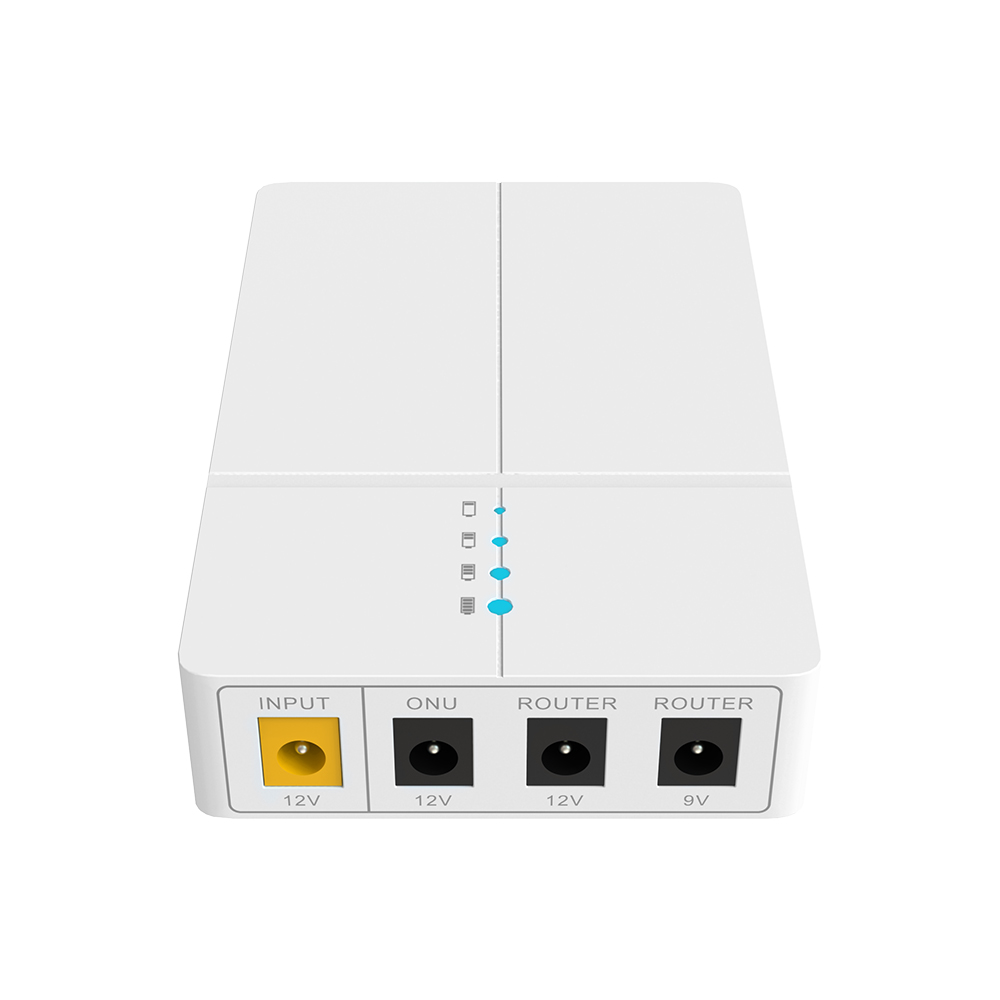
Optima 301 — multi-output mini UPS
Three DC outputs (12V, 12V, 9V), up to 27W, and capacity tiers from 6,000 to 9,900 mAh for a router-plus-modem load.
Ethrx P1 — gigabit PoE mini UPS
Selectable 24V or 48V gigabit PoE with DC 12V, DC 9V and USB QC 3.0 outputs, in 10,400 or 20,800 mAh tiers.
Optima 304 — LiFePO4 mini UPS
A 20,000 mAh lithium iron phosphate unit with five outputs including USB-C PD and QC 3.0, in a wall-mountable case.
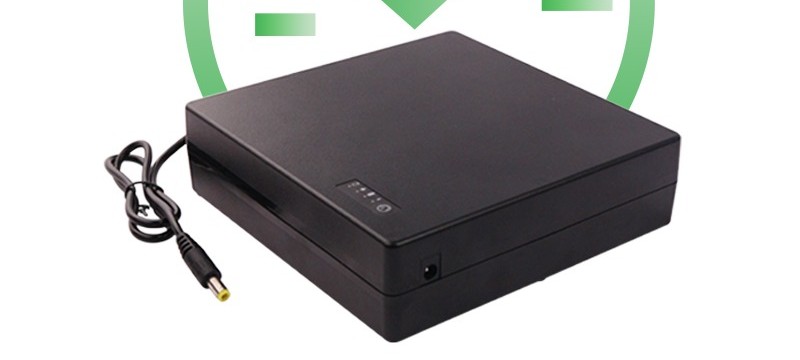
Maxora — high-capacity 12V mini UPS
A single 12V 3A output fed by 31,200 mAh of capacity for long runtimes on one demanding device.
How to read a mini UPS specification
Four lines of a model table do most of the work. Input is how the unit itself is fed — a DC adapter rail (12V or 24V) on most models, AC 110–220V on the PoE line, USB 5V on the pocket camera model. Output lists every port with its voltage and current; the device you protect must find its own voltage in that list, with at least its rated current beside it. Capacity is the battery size in milliamp-hours or watt-hours, and it is the runtime budget: at a fixed load, more capacity is simply more hours. Output power (max.) is the ceiling across all ports at once — the figure that matters when several devices share one unit.
Two consequences follow. First, a UPS cannot be chosen by capacity alone: a 31,200 mAh unit with the wrong output voltage is worth less than a 6,000 mAh unit with the right one. Second, ratings are per port and per unit at the same time — each device on its own 12V 2A port draws against that port's own 2A rating, while two devices sharing one 2A port must together stay under 2A — and where a model also states a whole-unit maximum (27 W on the Optima 301), the ports' draws together are checked against that too. Both checks can be done before an order, not after a return.
Questions buyers ask before ordering
How long will a mini UPS run my router? Runtime is capacity divided by load. The Optima 301's battery life is up to 6 hours; the 15,600 mAh Effcium B12 and the 31,200 mAh Maxora carry more capacity again in their classes. The adapter ratings on your devices give the ceiling for the estimate.
Can one unit power the router and the modem together? Yes — that is what the multi-output family is for. The standard pairing is a 12V router and a 9V modem; the Optima 301 carries both voltages plus a third port, and the dual-output Effcium A12 covers pairs that are both 12V.
What is the difference between a mini UPS and a power bank? A power bank is a battery with outputs; a mini UPS is a battery that sits permanently in circuit, charging while it passes power through and taking over when the mains fails, with no manual step. The 512A is the overlap: a six-output power bank positioned as an emergency power supply — emergency backup at home, portable power away from it. It has six outputs in all: two USB ports and four DC 12V outputs at 2A each.
My camera is powered over its network cable. What backs it up? A PoE UPS. The camera has no power socket, so its backup has to inject power onto the Ethernet cable — 24V passive or 48V standard, depending on the camera. The Ethrx line outputs switchable 24V/48V PoE and adds DC rails for the recorder and router in the same cabinet.
What does an online mini UPS do differently? The Boostra 106's load runs on the battery path permanently, so a mains failure switches nothing over. The Boostra 106 platform offers that design in 12V, 19V and 24V builds; the 24V build runs at DC 24V 3A (72W) with 24,000 or 31,200 mAh capacity tiers.
What should an inquiry include? The model (or the device list), each load's adapter voltage and current, the quantity band, and the destination market. With those four things, the reply can confirm the configuration for the device list instead of bouncing a catalogue link back.
How is a mini UPS charged? Through the same path it feeds from. Barrel-fed models charge from a DC adapter, the PoE Ethrx P1 takes 110–220 V AC directly, and the Optima B1 charges over USB-C. Between outages the battery refills from that input while the load runs from the input side, so a site with clustered outages should name the pattern in the inquiry — recharge time is part of the sizing.
Can a platform model be ordered with a different capacity? Usually, yes — that is what the tier structure is for. Several platforms offer their tiers side by side (the Optima 301's three, the Maxora's alternative cell builds), and a configuration request simply names the tier. Where a model is offered in a single capacity, the inquiry can still ask; the answer will distinguish between a tier that exists, a build that can be configured, and a combination the platform does not offer.
Is a bigger battery always the right answer? No. Capacity buys hours, but the binding constraint is usually the output side: the right voltages, enough current per port, and a form factor the installation accepts. An oversized unit with the wrong port set is a worse purchase than a compact unit that matches — which is why the family pages are organised by output first and capacity second, and why the inquiry asks for the device list before the quantity.
Backup for the systems that cannot blink
Loads divide by how they are fed and by their draw. A security camera is a continuous-recording load on a 5V, 12V or PoE feed. A POS printer is a spiky load on an adapter rail, peaking at each print run. A DVR is a continuous write load with a spinning disk's draw. The range has a class for each of these: pocket 5V units and PoE models for cameras, online models whose output never leaves the battery path for payment and recording equipment, and high-capacity single-output units for the recorders themselves. The application pages take each load in turn and narrow the catalogue down to the models that fit it.
Sizing backup time without a datasheet
A usable runtime estimate needs only two numbers, both printed on things you already own: the load's watts and the battery's watt-hours. A router label that says 12V 1A is a 12-watt ceiling for the estimate. A battery stated at 38.48 Wh — the Optima A1's four-cell pack — is the budget that ceiling is divided into: plan on the adapter figure and the answer is conservative by construction. Where a model states capacity in milliamp-hours instead, the tiers on one model still compare cleanly against each other, because the case, ports and conversion path are identical: the Optima 301's tiers step from 6,000 to 7,800 to 9,900 mAh behind the same ports, so the comparison stays a stored-energy comparison, apples to apples.
The estimate's job is not precision; it is class selection. If the arithmetic says the compact tier is marginal, the correct move is rarely a bigger guess — it is the next class up, where the margin is structural: a six-cell single-output unit for one device, a high-capacity model for a recorder, a LiFePO4 model where cycle life matters more than the hours. Buyers who send the load list with the inquiry get this arithmetic done against the actual model tables as part of the reply, which is the version of the estimate worth trusting with a purchase order.
Supply programs behind the catalogue
The range is built for repeat supply, not one-off retail. Platform tiers are set per model — the Optima 301's three capacity tiers, the Maxora's cell builds from 88.8 Wh to 185 Wh — so an inquiry can name the exact tier it means. Wholesale and OEM/ODM programs run on the same platforms: own-brand supply of catalogue models, or configured builds where capacity, voltage build or port layout needs to move. The wholesale and OEM / ODM pages set out how those programs start.
Ask for a quotation
Tell us the model, the output voltages your equipment needs and the quantity band for your order. If you are matching a UPS to a router, camera or terminal, add the device's rated voltage and current.