Model · 12V 2A
Effcium B12 — 15,600 mAh 12V 2A mini UPS
The Effcium B12 is the long-runtime model of the 12V 2A class: six 2,600 mAh cells totalling 15,600 mAh behind a single clean 12V 2A output, for the one-device installations — a router, a modem, a CPE.
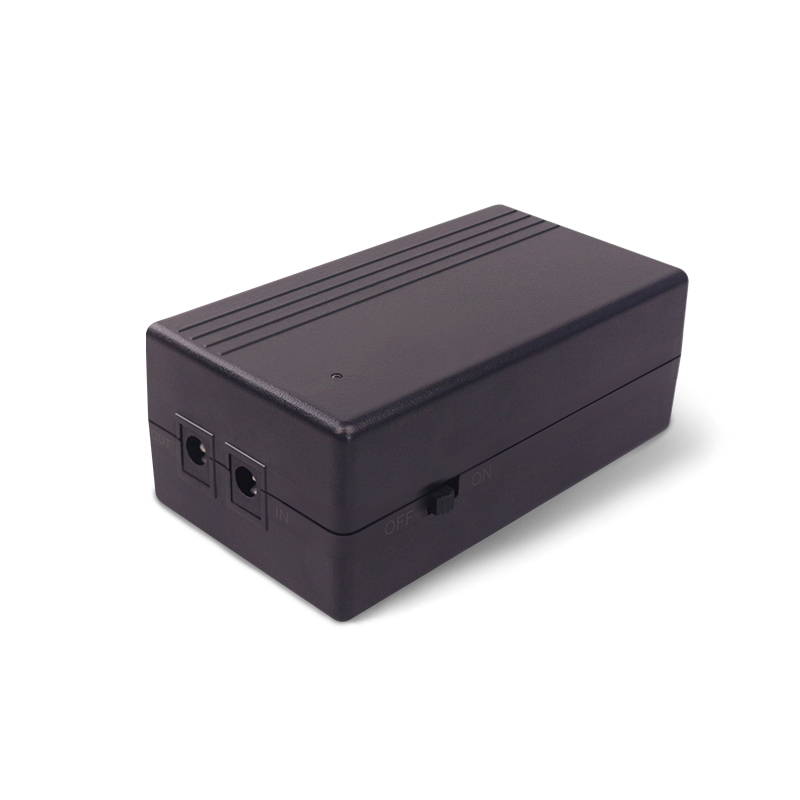
Specifications — Effcium B12
| Model | Effcium B12 |
|---|---|
| Battery | 15,600 mAh (6 × 2,600 mAh Grade A 18650 cells) |
| Output | DC 12V 2A (24W max) |
| Indicators | LED status indicators |
| Net weight | 0.345 kg |
Six cells behind one honest output
The B12 makes a simple trade: one output, no port splitting, and the saved complexity spent on capacity instead. Fifteen thousand six hundred milliamp-hours behind the single output, in a unit that still weighs only 0.345 kg and reads its state from front-panel LEDs. For a single 12V device that must not go down — the router the whole house depends on, the CPE at a remote site — this is the family's high-capacity single-output build.
Inside the B12's battery
The B12's pack construction is plain: 15,600 mAh assembled from six 2,600 mAh Grade A 18650 cells. That construction detail is worth more than it looks. Cell count and cell grade are where backup batteries quietly differ — a pack of fewer, larger-claimed cells at the same headline capacity is a different proposition from six named cells of a standard size — and a buyer comparing the B12 against alternatives should ask the same question of every candidate: how many cells, of what size, at what per-cell capacity. A supplier who prints the construction has answered it in advance.
The rest of the picture is equally concrete: a 12V DC unit whose output runs to 12V 2A (24W maximum), a case weight of 0.345 kg, and LED indicators for charge state. This is a workhorse specification for the single-device 12V class — one recorder, one terminal, one router of the hungrier sort — sized generously enough that most single loads sit well under the ceiling and the battery's working life is spent in its comfortable middle range.
Specifying and placing the B12
The specification question is the load's adapter rating: a device fed by a 12V 2A adapter is this unit's natural partner, and a device rated above 2A belongs on a higher-current model — the inquiry that quotes the adapter line gets that boundary checked explicitly. Runtime expectations should be set from the load's real draw rather than its adapter's ceiling; adapters are rated for peaks and startup surges.
Placement is undemanding — the unit is small and light — with two counsels: keep the LED indicators visible to whoever passes the installation, because a charge state that is seen is a fault found early; and keep the unit's own supply permanent. A backup plugged into a switched socket inherits the switch's habits, and more backup failures trace to a cleaned-up power strip than to any defect in the battery. State the installation's shape in the inquiry if it is unusual; ordinary ones need no discussion.
Replacement horizon and rotation
A single-device unit invites a simple fleet policy: record the install date on the asset register, and when a unit is replaced, replace it like-for-like from the spares shelf so the site's documentation never changes. The B12's construction — six standard-format cells — is what makes that like-for-like policy easy to keep.
Related pages
Ask for a quotation
Tell us the model, the output voltages your equipment needs and the quantity band for your order. If you are matching a UPS to a router, camera or terminal, add the device's rated voltage and current.