Model · Multi-Output
Optima 203 — six-output mini UPS
The Optima 203 is the wide-net model of the family: six outputs covering USB 5V and DC rails at 5V, 9V, 12V and 19V, so a mixed shelf — router, modem, a 19V mini PC or monitor accessory, a camera — can share one 13,500 mAh battery instead of carrying a separate backup per voltage.
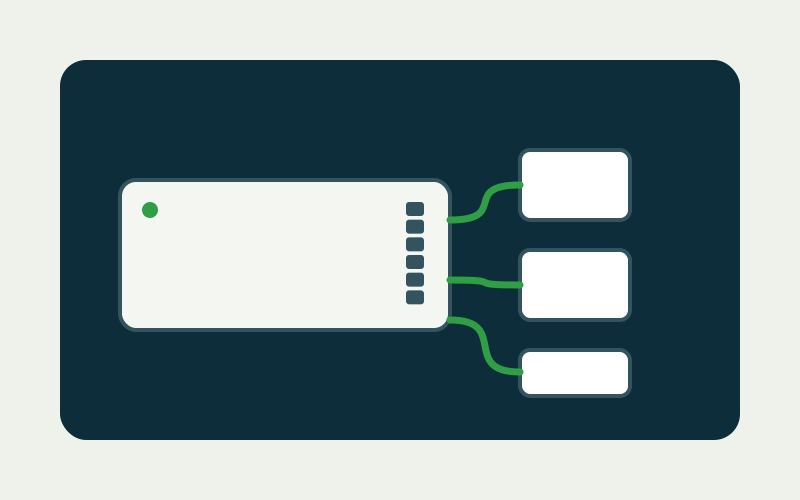
Specifications — Optima 203
| Model | Optima 203 |
|---|---|
| Family | Multi-output mini UPS |
| Outputs | 6 outputs |
| Output voltages | USB 5V · DC 5V · DC 9V · DC 12V · DC 19V |
| Capacity | 13,500 mAh |
One battery for the whole shelf
Mixed-voltage shelves are where single-output backups multiply into a tangle. The 203's spread of rails — including the 19V rail that compact multi-output units usually skip — lets an installer standardise on one backup unit per shelf. As with every multi-output model, the match is made per device: list each load's voltage and current in the inquiry and the port assignment can be confirmed against the unit's table before an order is placed.
Ordering notes — Optima 203
Six outputs is a statement about the installation: several small devices in one cabinet, each with its own rail. Quote requests for the 203 should list the cabinet's contents — device by device, with voltages — because the sibling question (whether a three-port unit plus a plain power strip does the job cheaper) can only be answered honestly from that list.
Where the 19V rail earns its place — Optima 203
The 19V output is the 203's distinguishing rail: mini PCs, small monitors and terminal accessories in the 19V adapter class are exactly the devices that mixed shelves accumulate and that narrower multi-output units cannot serve. A shelf with one 19V device is the 203's home ground; a shelf without one is usually quoted more cheaply on the three-port 301, and the inquiry's device list is what lets that call be made honestly.
Planning a six-output installation
Six outputs change the design conversation from 'which device matters most' to 'what shares this shelf'. The planning unit is the cabinet or shelf as a whole: list every device on it, group them by voltage — the 203's spread covers USB 5V and DC rails at 5V, 9V, 12V and 19V — and the port assignment falls out of the grouping. Devices at the head of the buyer's list (the router, the recorder) are noted first; devices that can reboot without harm (a label printer, a spare screen) are noted as optional loads, because shedding optional load is the lever that extends runtime when an outage runs long.
Capacity planning follows the same grouping. The 13,500 mAh pack feeds the whole shelf, so the runtime question is about the shelf's combined draw, not any single device. Add a 19V mini PC working at full draw and the arithmetic changes completely. The inquiry that lists the shelf honestly gets the honest version of that arithmetic back — including, where the numbers demand it, a recommendation to split the shelf across two units instead of overloading one.
Spares and standardisation — Optima 203
A one-unit-per-shelf standard has a quiet operational dividend: the spare is interchangeable with every shelf it might rescue, and the swap drill is the same everywhere. Sites should keep the shelf's port plan with the unit — a printed card in the cabinet door listing which device sits on which rail — because the technician performing a midnight swap should not have to reconstruct the plan from the cable tangle. The plan takes five minutes to write at commissioning and saves an hour at the swap.
Related pages
Ask for a quotation
Tell us the model, the output voltages your equipment needs and the quantity band for your order. If you are matching a UPS to a router, camera or terminal, add the device's rated voltage and current.