Model · Online
Boostra 106 — online UPS, 19V build
The 19V build of the Boostra 106 platform serves the equipment class that runs on 19V adapters — laptops, mini PCs and 19V terminals — with the platform's online architecture: the load runs on the battery path permanently.
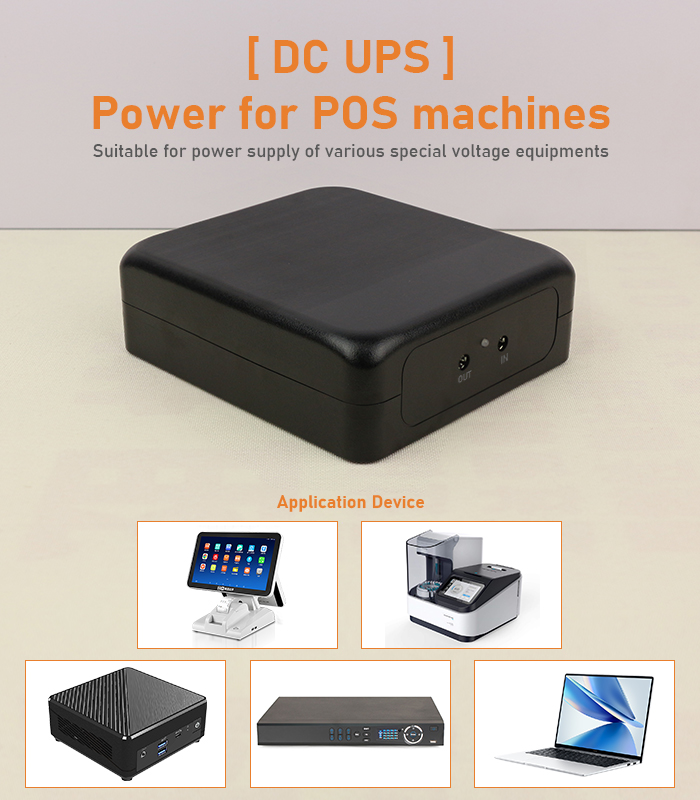
Specifications — Boostra 106 19V
| Model | Boostra 106 (19V build) |
|---|---|
| Battery type | 18650 lithium-ion |
| Output | DC 19V |
The 19V gap, covered
Most mini UPS ranges stop at 12V; the equipment that runs on 19V — the mini PC at the till, the laptop-class terminal, the 19V monitor or router — is left to full-size office UPS units. The 19V build of the 106 closes that gap in a desktop unit. Match the adapter's voltage (19V) first, and state the equipment's rated current and the runtime target in the inquiry so the build's rating and capacity can be confirmed against them.
The 19V equipment class, surveyed
The 19V class is the adapter world's quiet majority at the serious end of small equipment: laptop-class terminals, mini PCs sold with 19V bricks, monitors, and a long tail of industrial small machines whose designers chose 19V because the laptop industry made its components cheap. What these devices share is intolerance of casual substitution — a 19V device fed 12V sulks or refuses; fed 24V it may be damaged — which is why a dedicated 19V backup build matters and why 'close enough' voltage advice should be refused wherever it appears. The Boostra 106's 19V build brings the platform's online architecture to exactly that class.
An estate audit for this class is a label-reading exercise with one trap: devices whose adapters were replaced during repairs sometimes carry a substitute brick of a different rating from the device's own print. Where the adapter and the device disagree, the device's label governs — and the disagreement itself is worth reporting in the inquiry, because it usually means the device has been running out of specification and the backup design should know.
Capacity on the 19V build
This build is specified per inquiry rather than from a fixed tier table. The capacity question on a 19V load is sharper than on a router: a mini PC's draw varies with its workload, so the runtime target should be set against the machine's working draw, not its idle. Buyers who can state the load's typical working wattage — from the adapter's rating and the machine's class — get a configuration argued from the machine's working draw.
The inquiry for this build should carry three things: the device list with the voltage evidence (device label, not adapter, where they differ), the working-draw estimate, and the outage profile. With those in hand the reply can confirm the build, pick the tier, and flag any device whose label suggests it does not belong on a 19V rail at all — the cheapest possible moment to learn it.
Spares across the platform's builds
Estates running more than one 106 build should note what the shared platform does and does not make interchangeable: the case, the mounting and the commissioning routine transfer across builds, but a spare unit serves only its own voltage class. The spares shelf should therefore be stocked per build in proportion to each build's installed count — a detail the inquiry can settle at order time, when the estate's build mix is already on the table, rather than during the first failure.
Related pages
Ask for a quotation
Tell us the model, the output voltages your equipment needs and the quantity band for your order. If you are matching a UPS to a router, camera or terminal, add the device's rated voltage and current.