Model · Online
Boostra 106 — online UPS, 12V 5A build
The 12V build of the Boostra 106 gives high-draw 12V equipment — DVRs, NVRs, access systems — a full 5A of online, switchover-free power at 60W, instead of the 2A ceiling of the standard 12V classes.
Specifications — Boostra 106 12V
| Model | Boostra 106 (12V build) |
|---|---|
| Battery type | 18650 lithium-ion |
| Output | DC 12V 5A |
| Output power | 60W |
When 2A is not enough
A multi-channel DVR with its disk spinning, or a 12V access system at full load, draws past the 2A rating of the compact classes. The 12V build of the 106 is the platform's 12V 5A build, its load on the battery path like every online build, sized for that heavier 12V class: sixty watts, 12V at 5A, is the build's ceiling. State the equipment's rated current and the runtime target in the inquiry to fix the capacity tier. Loads that idle well below their adapter rating should say so; the tier is argued from the working draw, not the nameplate alone.
Ordering notes — Boostra 106 12V
Online architecture earns its premium where the load cannot tolerate a switchover at all — measurement, access and recording equipment head the list. If your load is an ordinary router, the platform's other families deliver the same backup at a lower class; the inquiry reply will say so plainly when the load list points that way.
The online architecture, in practice
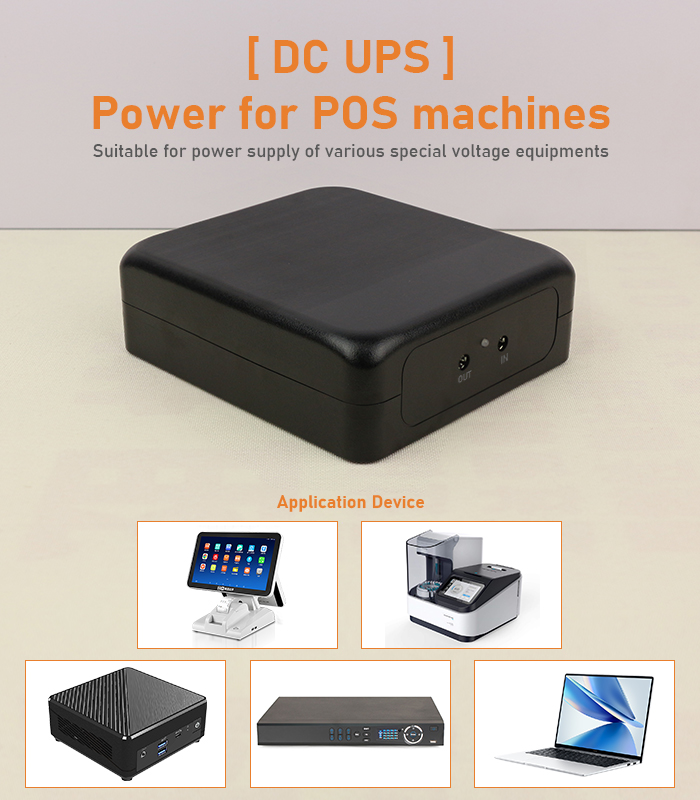
An online UPS keeps its battery permanently in the power path: the load is always fed through the battery side, and in an online design there is no transfer from mains to battery path at a mains failure. The Boostra 106 platform applies that architecture to single-voltage DC loads, and the 12V build — 12V 5A — addresses the heaviest 12V class in the catalogue: POS terminals, mini PCs and recorders whose adapters are rated well beyond a router's. Buyers arriving from the switch-over models should note the behavioural difference when they brief their installers: commissioning an online unit is about verifying the permanent path, not about testing the transfer.
This build's capacity tier is confirmed per inquiry, against the site's outage profile. A site audit is therefore written per site — voltage class first, then the tier its build offers — with both confirmed at order time.
Matching the 12V build to its loads
The load class that justifies this build draws real current: a POS terminal at full song, a mini PC under load, a recorder spinning disks. Total the nameplate draws honestly — adapters are rated for peaks, and a terminal that idles at a fraction of its adapter rating still spikes at startup. The 5A ceiling is generous for the class, but the inquiry that lists the loads with their ratings gets the ceiling checked rather than assumed, and gets the capacity question argued from the site's outage profile.
Recording the commissioning drill
The 12V build's loads — tills and terminals — are the loads whose failures get disputed: a lost transaction, a closed lane, a customer turned away. The commissioning record is the defence: date, load list, tier, and the result of the pull-the-mains drill, kept with the site's paperwork. When an outage is later blamed for a loss the backup was specified to prevent, that record separates a specification failure from an installation that was never the one on paper.
Related pages
Ask for a quotation
Tell us the model, the output voltages your equipment needs and the quantity band for your order. If you are matching a UPS to a router, camera or terminal, add the device's rated voltage and current.