Model · PoE
Ethrx P4 — PoE mini UPS with DC and USB outputs
The Ethrx P4 is the mixed-load member of the PoE line: a switchable 24V/48V PoE port for the camera, plus USB 5V and DC 9V and 12V outputs for everything at the near end — the configuration for a camera, a router and a modem that all live in the same cabinet.
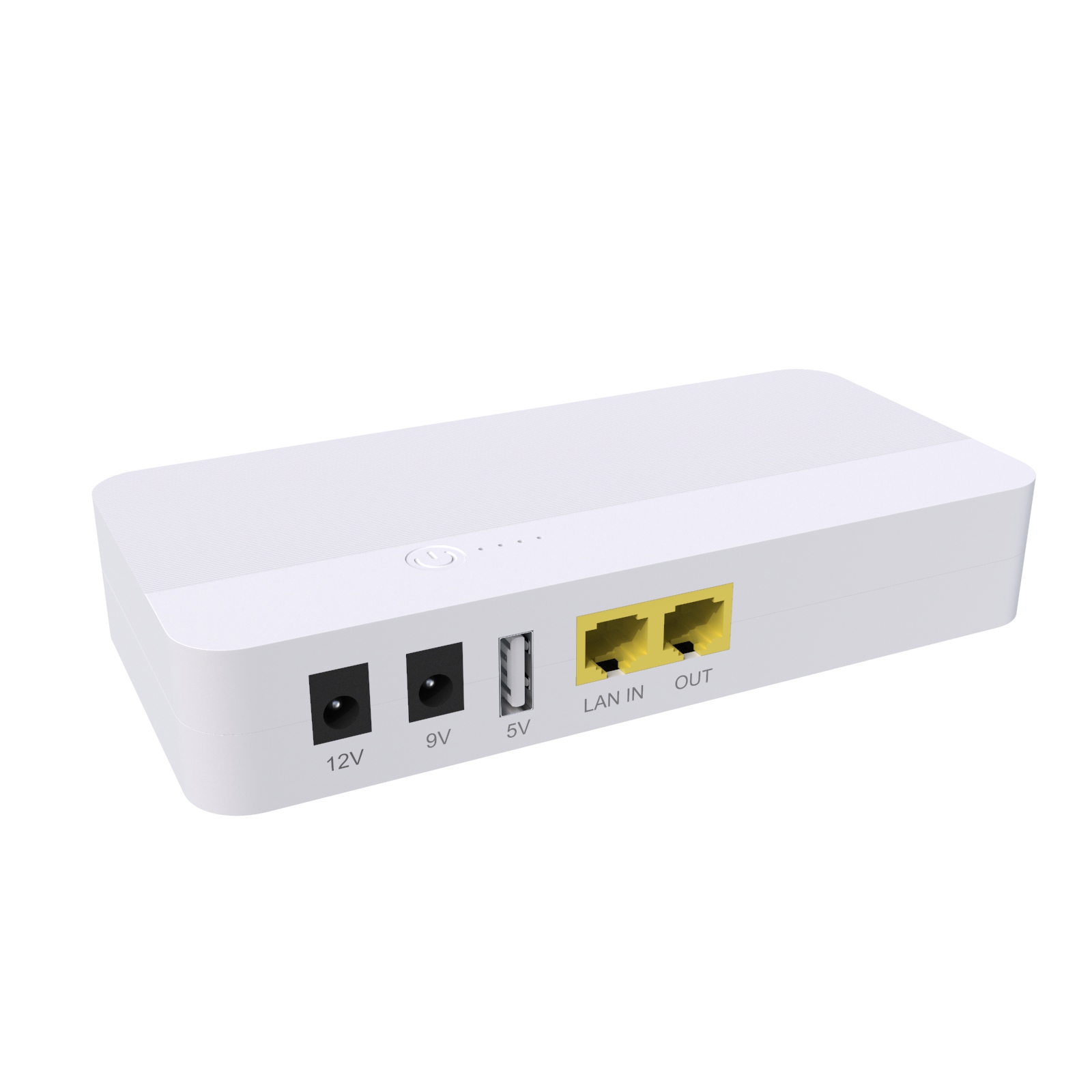
Specifications — Ethrx P4
| Model | Ethrx P4 |
|---|---|
| Family | Ethrx PoE mini UPS |
| PoE output | 24V or 48V, switchable |
| DC / USB outputs | USB 5V · DC 9V · DC 12V |
| Typical loads | PoE camera + router + modem from one unit |
One cabinet, one battery
Small CCTV and CPE installations concentrate in one cabinet: camera feed out, router and modem in. The P4's port set mirrors that cabinet exactly — PoE for the run outside, 12V and 9V for the network pair, USB for the odd 5V device. Confirm the camera's PoE voltage and each load's current in the inquiry; the reply will map every device to a port.
The P4 as the estate's flexible unit
The P4 is a deliberately unspecialised tool: USB 5V and DC 9V or 12V outputs beside a PoE feed that runs at 24V or 48V. In an estate whose devices are mixed — different voltages, some not PoE at all — that breadth makes the P4 the flexible unit: USB, DC and PoE outputs in one box, carried as the van spare and the first-response unit while the permanent answer is specified.
That breadth has a discipline attached. A flexible unit deployed permanently should still be documented like a specialised one — which voltage its PoE feed is set to, which devices hang on its DC rails — because the next technician inherits the setting, not the reasoning. Estates should record the configuration on the cabinet door or in the asset register at install time; the five minutes it takes is the difference between a spare that rescues a site and a spare that confuses it.
Choosing the PoE voltage, run by run
The 24V-or-48V question is answered per run, never per building. Read the powered device's own label: standard-PoE cameras and access points expect 48V with negotiation; passive devices expect 24V, always on. Feeding a passive device from a standard port leaves it dark; feeding a standard device from a passive 24V pair leaves it dark too — and feeding 48V into a device built for 24V can end the device. The census that prevents all three outcomes is a ladder-and-label exercise: every powered device in the estate, listed with the voltage printed on it. That list, sent with the inquiry, lets the reply confirm the P4's settings device by device.
Cable runs deserve the same care. PoE delivers power and data over one run, and the run's length and quality bound what arrives at the far end: voltage drops along a long or thin cable, and a device at the end of a marginal run sits closer to its minimum input voltage, and the margin thins further when the whole chain is on battery. Installers planning long runs should state the distances in the inquiry — not because the answer changes the model, but because it changes where the UPS is best placed along the chain.
The near-end loads are part of the design
A PoE backup that covers only the camera leaves the rest of the chain dark: the recorder at the end of the recording path and the router on the network path draw from the same outage. The P4's DC and USB outputs exist for the near end — the recorder at 12V or 9V, the router or switch on its own rail — so camera, recorder and network share one battery. When the inquiry lists a camera alone, the reply will ask the near-end question anyway; listing the full chain at the outset — camera, recorder, router, switch, with each device's rated voltage and draw — gets the complete configuration in one pass.
Related pages
Ask for a quotation
Tell us the model, the output voltages your equipment needs and the quantity band for your order. If you are matching a UPS to a router, camera or terminal, add the device's rated voltage and current.